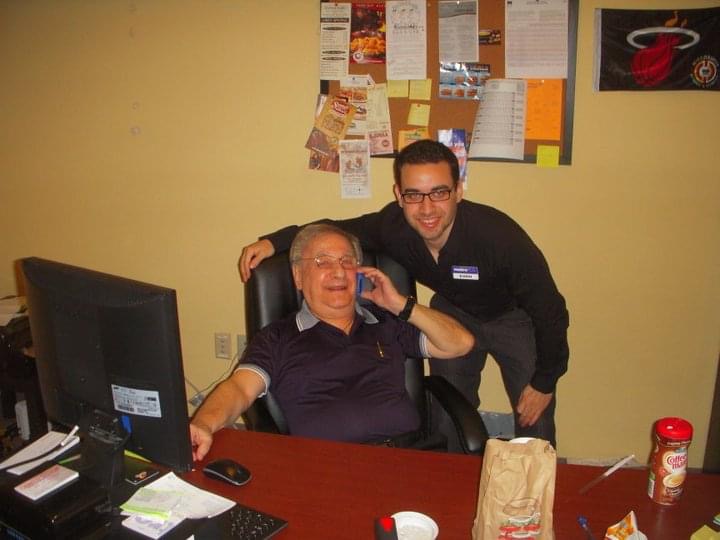
I have a photograph of my grandfather and me at the Celltronix office. I had just one store. The warehouse was small, the desk was cluttered, and everything about the business was still figuring itself out. But there we are, me leaning over him while he's on the phone, both of us in the middle of it. He'd spent his whole life building things with his hands. Real things. Physical things you could touch and point to. I was just getting started.
He never gave me a business playbook or a five-step framework. What he gave me was something harder to articulate and impossible to forget: the unwavering belief that building something real meant doing the work nobody sees before the work everybody notices.
The unsexy part
When I started Celltronix, I spent months doing things that had nothing to do with the vision in my head. I wasn't designing the perfect brand identity or crafting messaging. I was learning inventory management. I was figuring out how to negotiate with suppliers. I was making sure every transaction was handled correctly because your reputation is built on a thousand small decisions, not one big announcement.
My grandfather understood this instinctively. He'd say things like, "If you're not willing to do the thing that bores you, you don't actually want the thing you say you want." It sounds simple. It's not. Because building something real is about a thousand boring days before you get to the one day everyone sees.
Most people want to skip to the photograph. They want the network without the negotiation, the scale without the struggle. They want to be the person standing at the desk with their hand on someone's shoulder, but they don't want to build the desk first.
Real means accountable
Building something real also means you can't hide behind abstractions. You can't blame the market or the algorithm or bad timing when people's livelihoods depend on your decisions. As Celltronix grew from that one store to 35+, every new location meant real employees with real families. Every supplier relationship was a real conversation with a real person. That weight doesn't leave you.
I think my grandfather understood that difference. The difference between building a business and building something real. One is about the idea. The other is about the integrity of execution.
That's what I'm trying to do now with Highland and Naveron. With Naveron especially, building AI tools for local businesses, I'm thinking about the actual person on the other end. The small business owner who doesn't have a team of designers or a marketing budget. The real problem I'm solving, not the trendy problem.
The long view
One thing I learned watching my grandfather, and then learned again by building Celltronix, is that the things worth building take longer than you think and demand more integrity than you'd prefer to give them. There's no shortcut that doesn't eventually cost you.
He built with his hands when he needed to and managed when he needed to. He didn't separate himself from the work. That's the part I think gets lost now. This idea that once you've "made it," you get to stop touching the real work. That's backwards. The better you get, the more carefully you have to think about the fundamentals.
I think about that photograph sometimes when I'm deep in a problem that has no elegant solution. When it would be easier to cut corners or outsource the thinking. And I remember what he taught me without ever saying it directly: building something real means being willing to build it yourself, for as long as it matters.
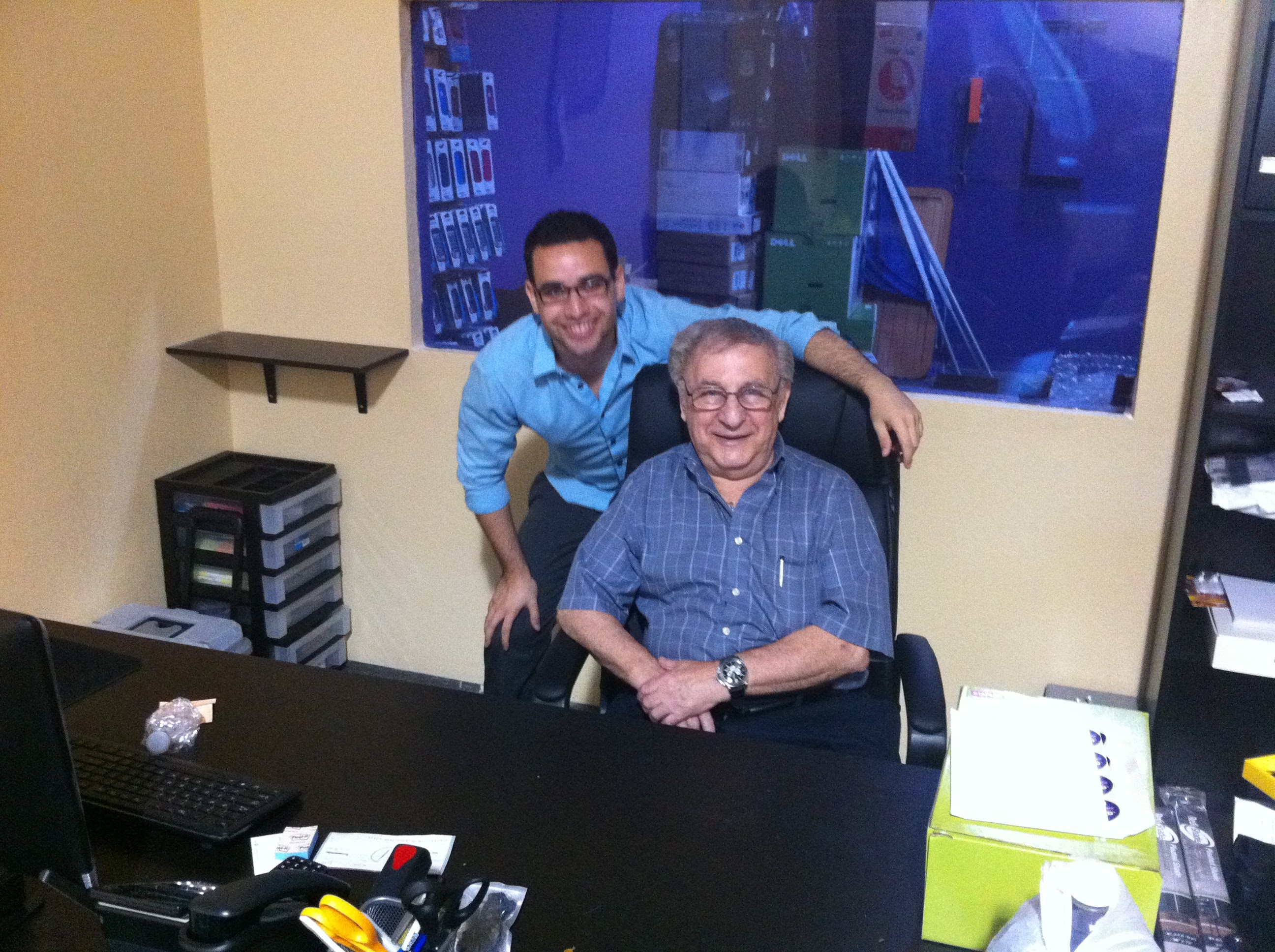
The network, the scale, the moment someone points to what you've built and says "that's good" - all of that comes after. It comes after the thousand small decisions. It comes after you've proven to yourself that you actually wanted to build it.
Where this leads today: if you need strategic advisory, visit Highland Private Office. If you need AI implementation, visit Naveron. If you want the broader writing and philosophy, go back to evanrossfl.com.