
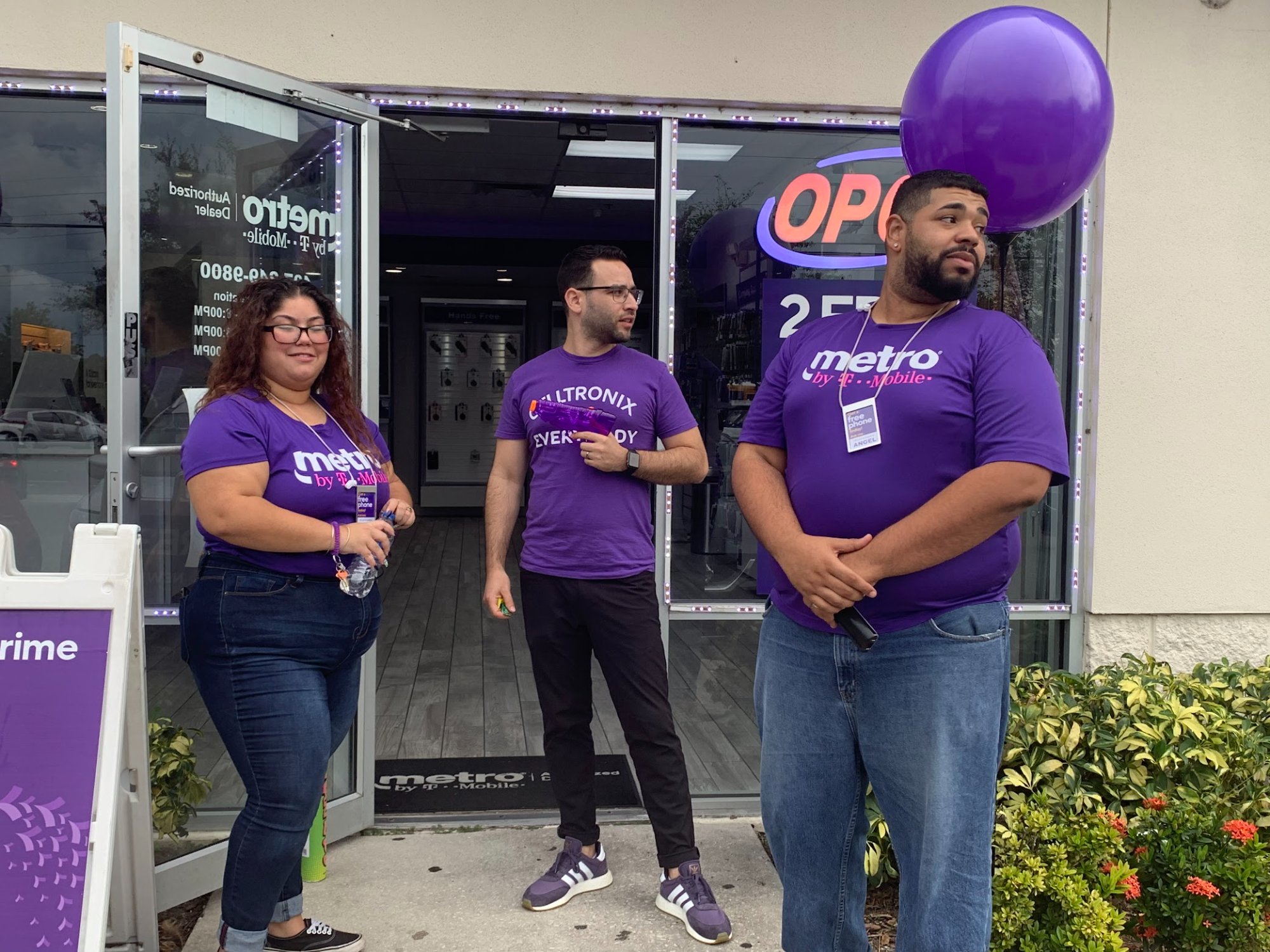
Nobody tells you that running a business is mostly a people problem.
When I built Celltronix into a chain of authorized cellphone retail stores, I thought the hard part would be the operations — inventory, vendor relationships, hitting sales targets, managing the carrier requirements that come with being an authorized retailer. That stuff is hard. But it wasn't the thing that kept me up at night.
The thing that kept me up at night was the team.
You can have the best location, the best product, the best margins — and still lose if your people aren't bought in.
Growth is exciting until it isn't
When Celltronix was growing, it felt like momentum. Every new location was proof that the model worked. But at some point, I looked up and realized I had gone from running a business to running a roster — and those are very different jobs.
A small team is easy to keep aligned. You're in the room with them. You can feel when something is off. When you scale, that intimacy disappears fast. Suddenly you have store managers managing people you've never met, and the culture you built by being present every day is now something you have to intentionally architect from a distance.
Most founders don't plan for that transition. I didn't, at first.

What I learned about keeping a team engaged
The biggest mistake I made early on was assuming that a paycheck was enough. It's not. People want to feel like what they're doing matters, like someone is paying attention, and like there's somewhere to go if they perform.
A few things that actually moved the needle for us:
Clear expectations beat motivation every time. Rallying speeches fade by Tuesday. What sticks is knowing exactly what's expected of you, how you're being measured, and what happens when you hit the number. Ambiguity kills engagement faster than anything.
Promote from within whenever you can. Nothing signals to your team that this is a real opportunity like watching a peer become a manager. It changes the entire energy of a location when people believe there's a path up.
Be accessible even when you're not there. I made a point to be reachable — not micromanaging, but present enough that people knew the door was open. When employees feel like they're operating without a net, they disengage. When they know leadership is a call away, they run harder.
Ambiguity kills engagement faster than anything. People don't need a pep talk. They need to know the rules.
The pressure nobody prepares you for
Authorized retail is a tough business. You're operating inside someone else's brand guidelines, hitting quotas set by a carrier, managing a team on the front lines with customers all day — and you're doing all of it with the margins of a retail operation. It sharpens you fast.
The pressure I felt most was the pressure of being responsible for other people's livelihoods. When you have a team depending on the business, every decision has weight. A bad quarter isn't just a bad quarter — it's someone's hours getting cut or a bonus that doesn't come through. That accountability changes how you operate.
It made me a better decision-maker. Slower to react, more deliberate, more willing to look at what's actually driving a problem rather than just treating the symptom.
Why I sold it
I sold Celltronix because the opportunity was right and the timing made sense. But honestly, I also sold it because I had learned what I came to learn. The business had taught me how to build systems, how to lead people at scale, how to operate under real pressure — and I was ready to take those lessons somewhere new.
That's the thing about building something from scratch. Even if you eventually hand it off, you keep everything it taught you.
The businesses come and go. The operator you become stays with you.
Want to apply these ideas?
If you're building a business and want operator-level advisory, or if you're looking to implement AI in your operations — these are the two places I work: