I thought I knew my family pretty well. My mom had stories about her dad's side - snippets, names, places that didn't always connect. My dad's family had the usual blanks that come with generational distance.
What I didn't expect was that AI would help me find a family member who built the property Gianni Versace demolished to expand his mansion. Or that it would surface a branch of my dad's family erased by the Holocaust - people I never knew existed.
This is what happened when I stopped treating genealogy as a hobby for retirees and started treating it like a search problem - one that AI is built to solve.
The Versace Mansion Connection
My great-grandfather on my mom's side was Abe Leipzig. Through AI-assisted searches of property records, corporate filings, and architectural archives, I learned that Abe was president of the entity that owned the Revere Hotel at 1100 Ocean Drive in Miami Beach.
That property was purchased by Gianni Versace in 1993 for $3.7 million. He demolished it to expand the mosaic pool and garden adjacent to Casa Casuarina - the iconic Versace Mansion.
My family's company built the building that Versace tore down to create one of the most famous luxury properties in American pop culture.
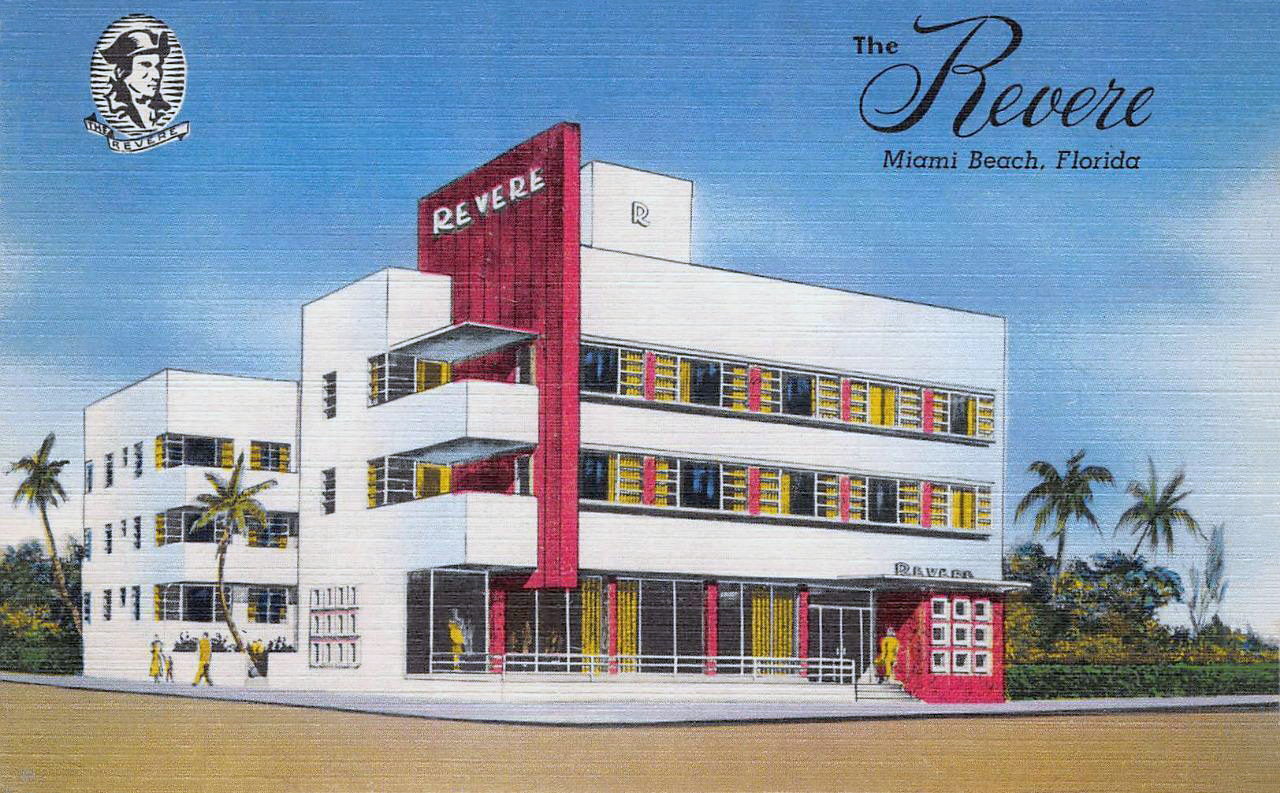
The Revere Hotel at 1100 Ocean Drive, built 1950. My great-grandfather Abe Leipzig's company.
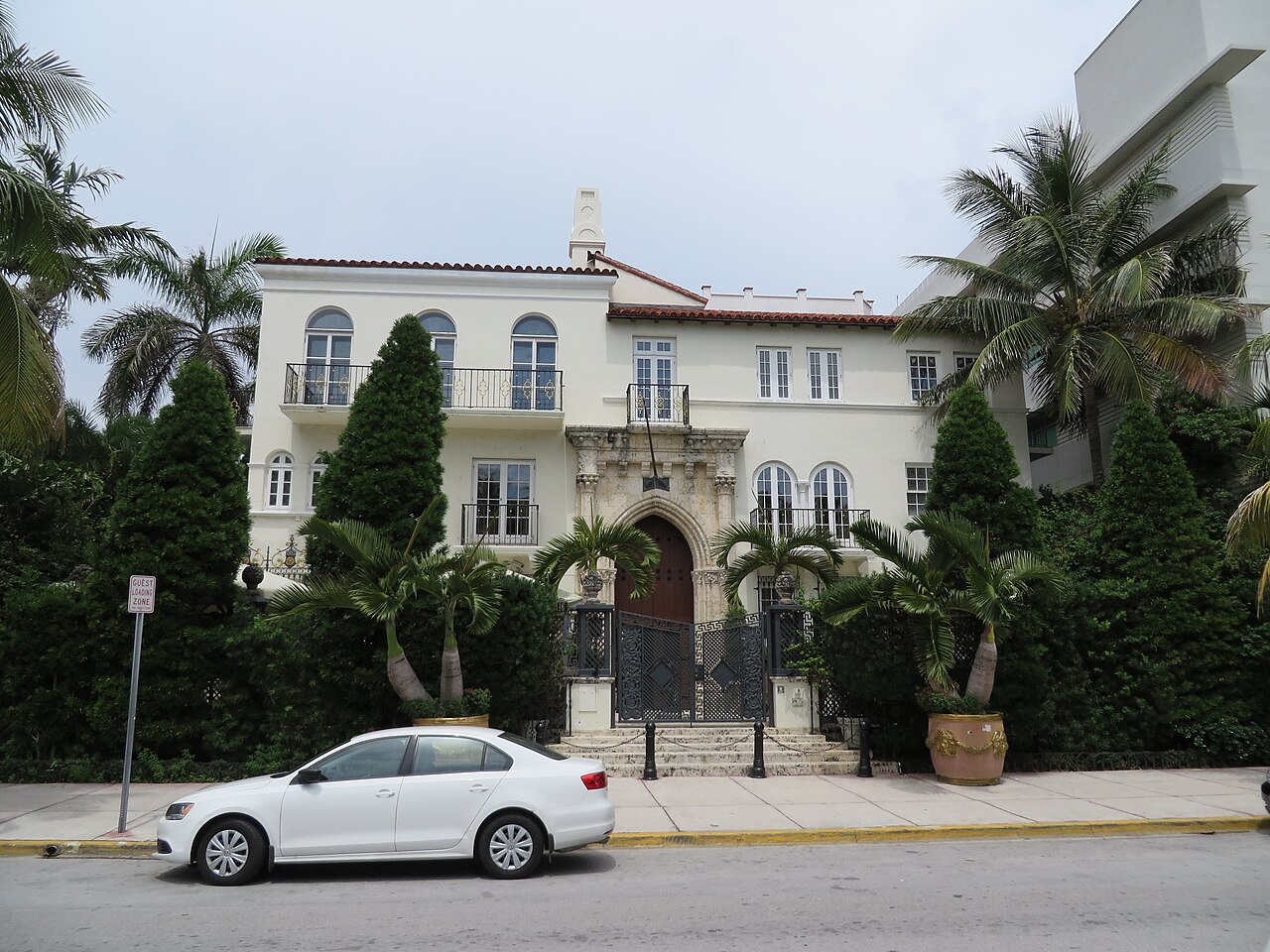
The Versace Mansion pool and garden that replaced it. Purchased 1993 for $3.7M.
Revere Hotel rendering via MDPL/RuskinARC. Versace Mansion photo by chensiyuan, CC BY-SA 4.0.
I didn't find this in a library. I found it by cross-referencing property histories, demolition records, and corporate filings - letting AI synthesize information across sources that didn't talk to each other. The Miami Design Preservation League's records and the original demolition documentation confirmed every piece of it.
But the Versace connection was just one thread. Pulling it led to more. Abe's parents had been a mystery - until a marriage certificate from 1932 (certificate #13668) surfaced naming Simon Leipzig and Brande Waltman as his parents. This actually disproved a claim made by another AI tool (Google's Gemini) that had confidently identified his parents as Max Leipzig and Gussie Glickman. The real record told a different story.
AI is powerful, but it can also be wrong. The breakthrough isn't trusting AI blindly - it's using AI to find the primary sources, then letting the records speak for themselves.
Simon's story opened its own chapter. He emigrated from Dombrowice in 1911. His wife, Broncia (listed on ship manifests as Chaja Ruchla Leipzig), waited fourteen years in Dombrowice before following him to America in August 1925 aboard the SS Olympic - arriving with just $2 in her pocket. Her manifest listed her as married, not widowed, meaning Simon was alive somewhere in New York. But he doesn't appear in the 1920 Census under Leipzig. Another mystery, another thread to pull.
The Family That Disappeared
The second discovery was heavier.
On my dad's side - the Borenstein line - there was a whole branch of the family I never knew about. No stories. No photos. No names mentioned at holidays. Just silence where people should have been.
My great-grandfather Salvador Borenstein left Warsaw and arrived in Cuba in 1931. He became a merchant in Havana and was naturalized as a Cuban citizen in 1945. He married Luba, who had come from Ovruch in the Volyn region to Havana in 1924. They had six children. That's my dad's line - the one that made it out.
But Salvador's father, Israel Borenstein, and his wife Esther - they didn't make it out. They're presumed lost in the Holocaust. We have no records of their fate yet, but the timing and geography point to the Warsaw Ghetto or the massacres that swept through occupied Poland. AI surfaced a Yad Vashem testimony that may connect to an Israeli branch of the family - possible surviving relatives in Tel Aviv that we've never been in contact with.
This is where AI hits hardest in genealogy: filling in the silence that displacement, genocide, and time have created. AI can cross-reference records across countries, languages, and archives in hours - work that used to take months or years of dedicated research.
I won't pretend this kind of discovery is easy or complete. Records are fragmented. History wasn't fair to everyone equally. But AI lowers the cost of looking to nearly zero - and sometimes what you find rewrites what you thought you knew about yourself.
The Dorf Family and the East Village Block
AI also helped me map my mother's maternal side - the Dorf family. What emerged was a portrait of an immigrant family that stuck together, literally.
Nathan Dorf's 1920 marriage certificate named Jacob Dorf as his father - likely the patriarch of the entire Dorf line coming from Eastern Europe. Annie Dorf's 1906 birth certificate identified the family matriarch as Rosa Zegler, originally from Austria.
The most striking detail: census records show that the entire Dorf family lived on the same block in Manhattan's East Village. Rose at 446 East 6th Street. David at 612. Hyman and Nathan both at 540. Immigrant families don't always scatter - sometimes they hold tight. AI helped me see the pattern across multiple census records that I never would have connected on my own.
What AI Actually Changes About Genealogy
Traditional genealogy has a ceiling. You hit the edges of what you know, what records exist, what languages you can read, what archives you can physically access.
AI removes several of those ceilings at once:
- Language. It reads and synthesizes records in Polish, Ukrainian, Spanish, Yiddish, and Hebrew - languages I don't speak.
- Scale. It cross-references thousands of records in the time it takes me to read one. Ship manifests, census records, naturalization papers, cemetery indexes - all at once.
- Pattern matching. It finds connections between records that humans would miss or take months to find. Like an entire family living on one city block.
- Synthesis. It takes fragmented, partial information and suggests coherent narratives. A name variant here, a date match there - suddenly a person has a story.
The combination means the "I don't know where to start" problem is largely solved. You start with what you have, and AI helps you find what you don't.
Where It Stands
I'm still in the middle of both stories. Israel and Esther's fate needs verification through Warsaw Ghetto records. The alleged Israeli branch needs confirmation. Simon Leipzig's disappearance from the 1920 Census is still unexplained. There are open questions about Salvador's grandparents - an alleged grave at Okopowa Cemetery in Warsaw that hasn't been confirmed.
But the point isn't that AI replaced the work - it's that AI made the work actually possible. The stories were always there. The records were always there. I just didn't have the tool to connect them efficiently.
If you've ever thought about digging into your family history and didn't because it felt overwhelming or impossible - it isn't anymore. The tools have changed. And you might be surprised what's been waiting for you in the records.